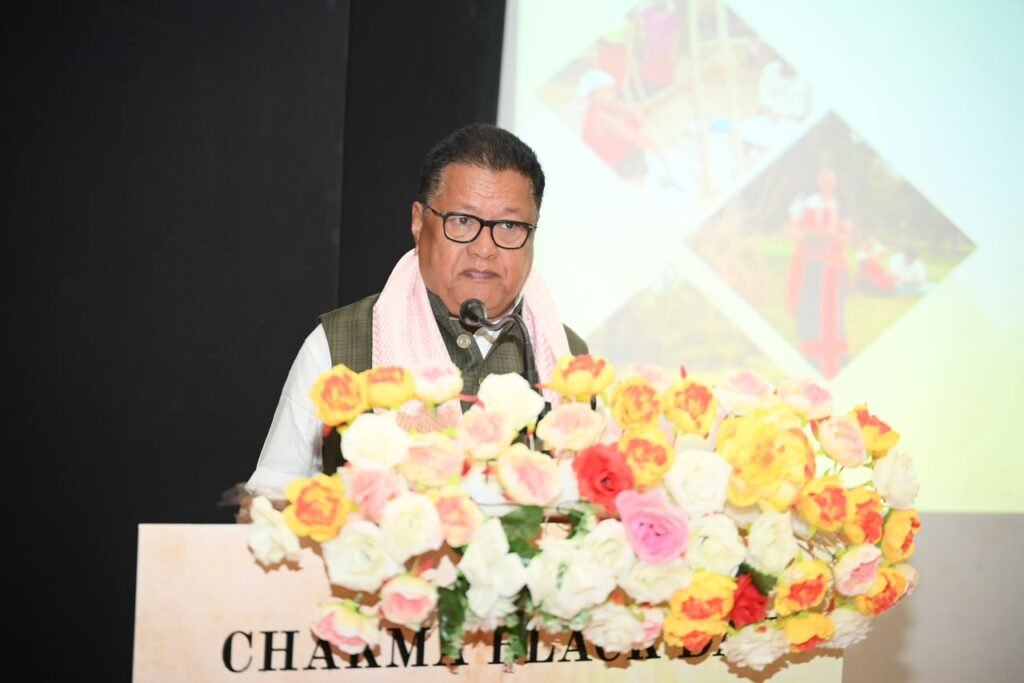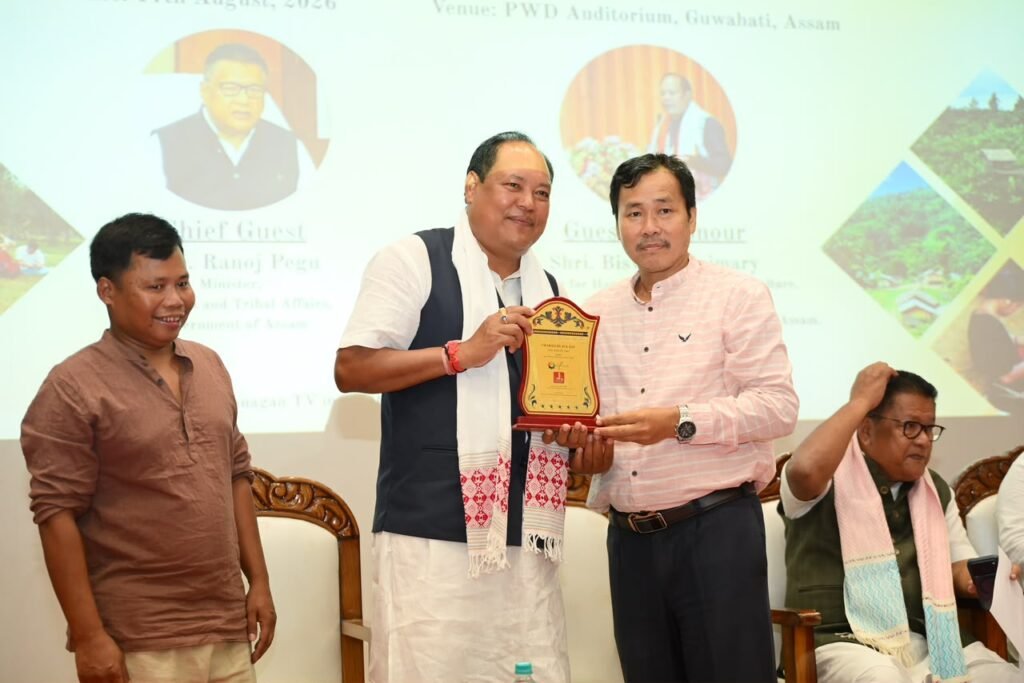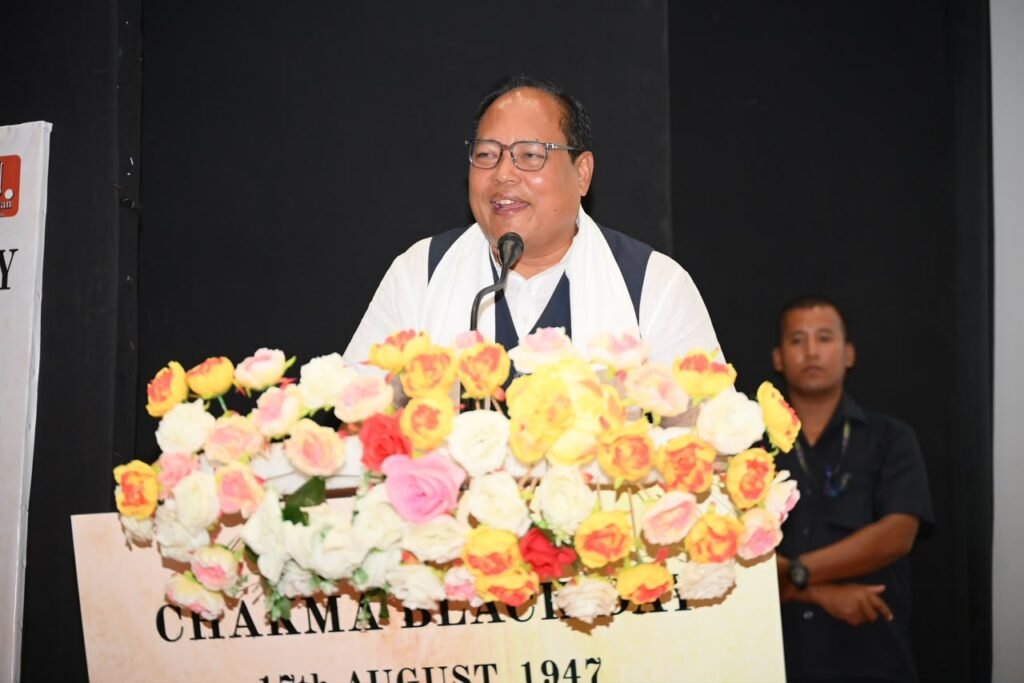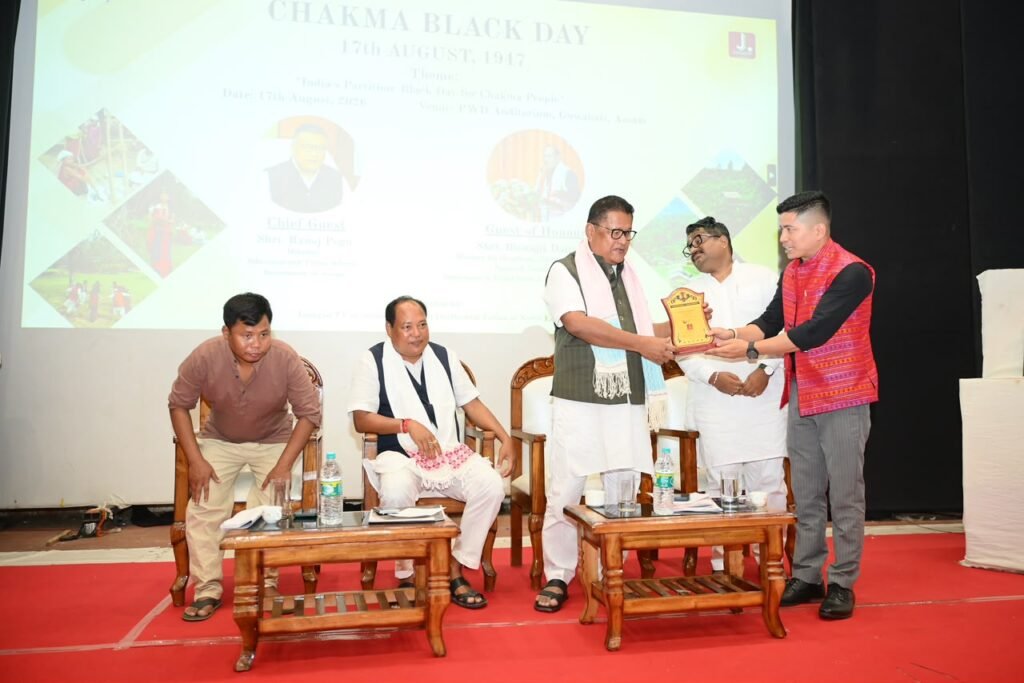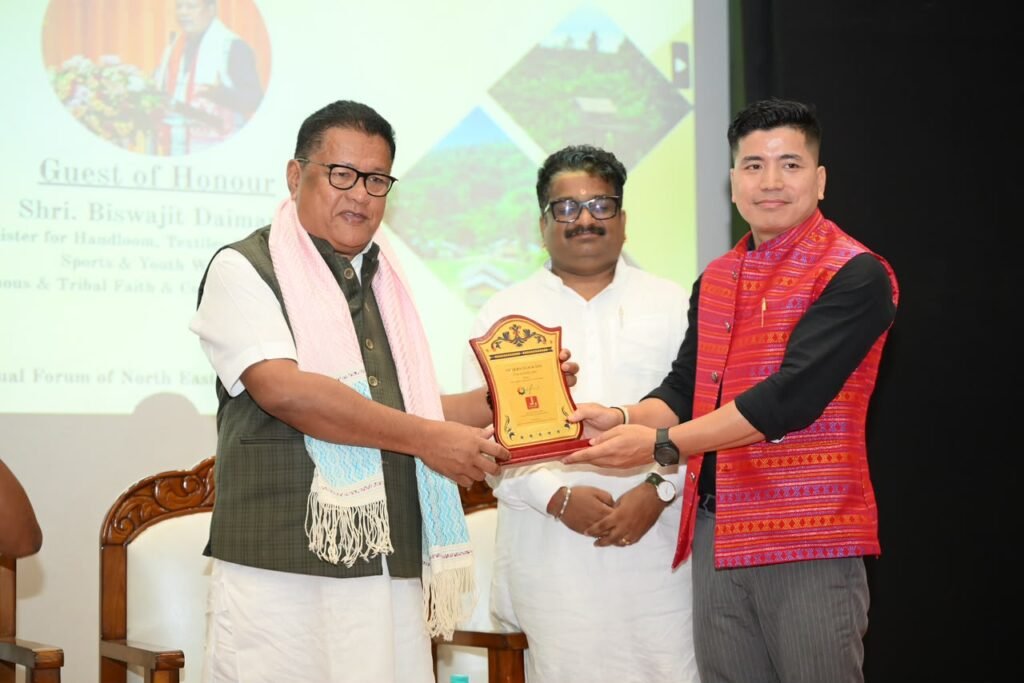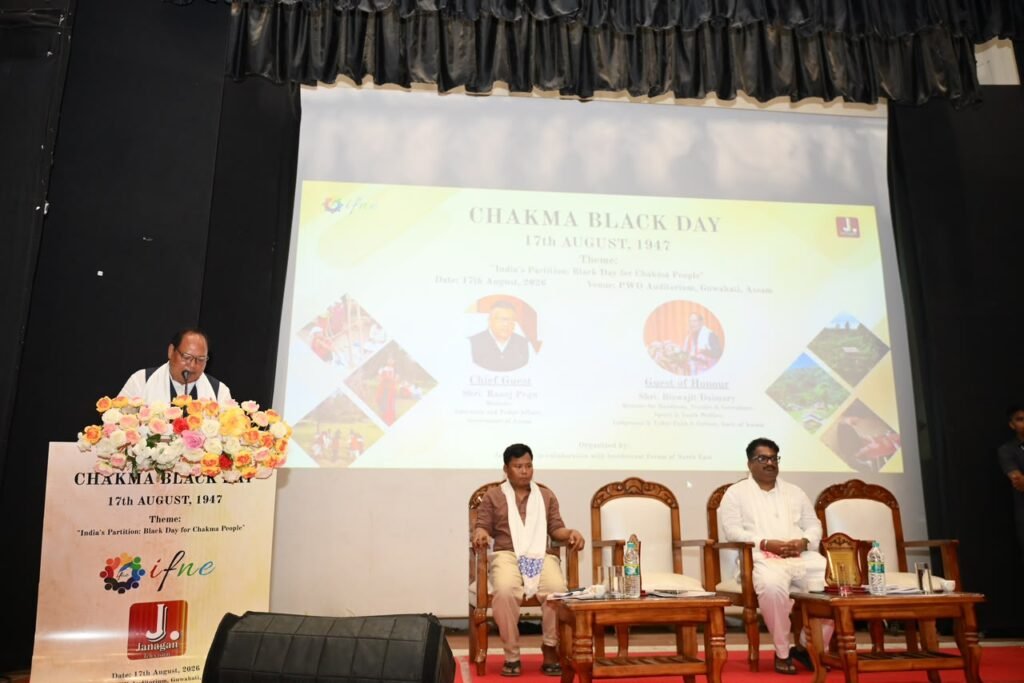
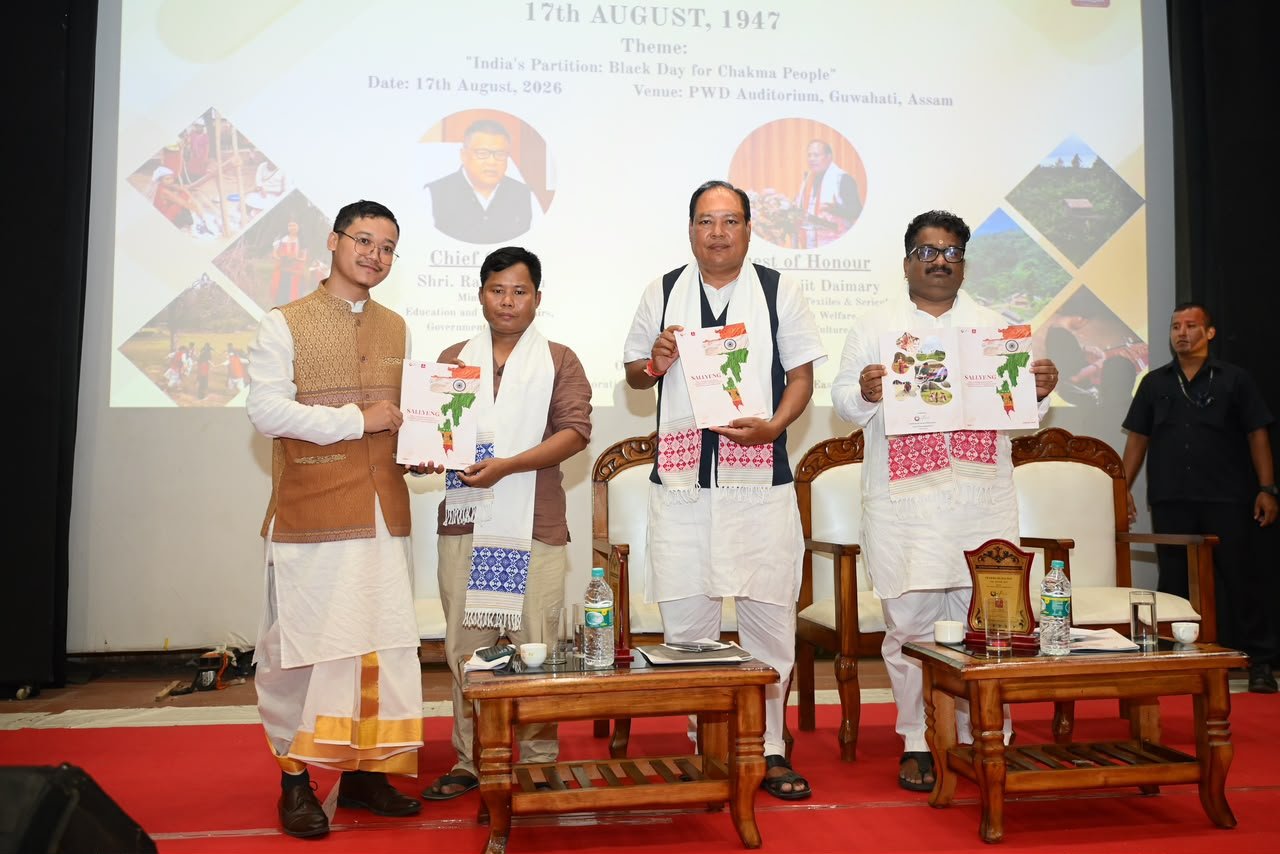
Date: 17 August 2026
Venue: PWD Auditorium, Guwahati, Assam
Organised by: Intellectual Forum of North East in collaboration with Janagan TV
Supported by: Guwahati Chakma Students Union (GCSU) and All Assam Chakma Society (AACS)
The Chittagong Hill Tracts (CHT) is home to fourteen Indigenous communities and many members of these communities also reside across the states of Northeast India, sharing longstanding historical, cultural, linguistic and kinship ties that predate the Partition of the Indian subcontinent.
The publication of the Radcliffe Award on 17 August 1947, which placed the Chittagong Hill Tracts under Pakistan despite its overwhelming indigenous non-Muslim majority of more than
98.5 percent at the time, marked a profound turning point in the history of the region. The decision divided closely connected Indigenous Peoples across an international border and fundamentally altered the political geography, demographic composition, governance structures and security dynamics of both the Chittagong Hill Tracts and Northeast India. For many Indigenous Peoples in present-day India and Bangladesh, 17 August represents a day of historical injustice and is therefore commemorated as Black Day.
Over the past several decades, the Chittagong Hill Tracts has undergone significant demographic, political and socio-economic changes. Indigenous Peoples now constitute less than 50 percent of the population, while non-Indigenous Muslims account for more than half (50%) fundamentally transforming the demographic composition of the region. At the same time, religious conversion of Indigenous peoples to Islam, continuing land alienation resulting from military expansion, tourism and state-led development and climate-related projects, including protected areas, reserve forests and other state interventions, have contributed to the dispossession of Indigenous Peoples from their ancestral lands and have weakened their political, social, cultural and economic rights and long-term survivability.
These developments raise important questions concerning the future of the Indigenous Peoples of the Chittagong Hill Tracts, the protection of their constitutional and human rights, and the
broader geopolitical and security implications for Northeast India. Given the strategic location of the Chittagong Hill Tracts along India’s international borders with Mizoram, Tripura and Assam, developments in the region have implications that extend beyond Bangladesh and warrant careful policy attention.
Observing 17 August as Black Day provides an opportunity not only to remember a defining moment in the history of the Indigenous Peoples of the Chittagong Hill Tracts but also the historical blunder committed by the British and the then Indian Congress leaders. Consequently, jeopardising the future of both India and the Indigenous Peoples (of CHT and Northeast India).
This event of observing the Black Day aims to facilitate informed, evidence-based dialogue on contemporary issues relating to indigenous identity, demographic change, land governance, regional security and cross-border indigenous solidarity.